Insight
Advantages of Plywood Over Other Building Materials: A Technical Comparison
In the modern construction industry, choosing the right substrate is critical for the longevity and structural integrity of any project. While options like solid wood, MDF, and OSB are widely available, Plywood remains a dominant force. Understanding the advantages of plywood compared to other building materials is essential for architects, contractors, and furniture manufacturers alike.
This article analyzes why plywood’s engineered structure provides superior performance across various structural and decorative applications.
I. Superior Structural Stability Through Cross-Graining
The most significant technical advantage of plywood lies in its construction method. Plywood is created by layering thin veneers of wood at 90-degree angles to one another, a process known as cross-graining.
1. Resistance to Warping and Splitting
Unlike solid wood, which expands and contracts significantly across the grain when exposed to humidity changes, plywood’s cross-layered structure cancels out these forces. This leads to exceptional dimensional stability, meaning the panels are much less likely to warp, shrink, or swell.
2. High Strength-to-Weight Ratio
Plywood distributes weight and stress evenly across the panel. This provides high impact resistance and shear strength, making it ideal for flooring, roofing, and wall sheathing where structural loads are a primary concern.
II. Plywood vs. Other Engineered Woods (MDF and OSB)
When comparing plywood to other engineered wood products, several performance gaps become apparent:
| Feature | Plywood | MDF (Medium Density Fiberboard) | OSB (Oriented Strand Board) |
| Moisture Resistance | High (especially Marine or Exterior grades) | Low (swells easily) | Moderate (slower to dry) |
| Screw Retention | Excellent (long fibers grip fasteners) | Poor (tends to crumble) | Moderate |
| Weight | Lightweight | Very Heavy | Heavy |
| Structural Integrity | High | Low (Decorative only) | High (Structural only) |
1. Moisture Performance
One of the key advantages of plywood is its behavior in wet conditions. While MDF acts like a sponge and loses its shape when wet, high-quality plywood maintains its structural form. Even if it absorbs moisture, it dries quickly and retains its original dimensions much better than OSB.
2. Fastener Strength
Because plywood is made of continuous wood fibers, it holds screws and nails far more securely than particle-based boards. This is critical in cabinetry and furniture making where joint durability is paramount.
III. Versatility and Aesthetic Appeal
Plywood bridges the gap between structural utility and aesthetic beauty.
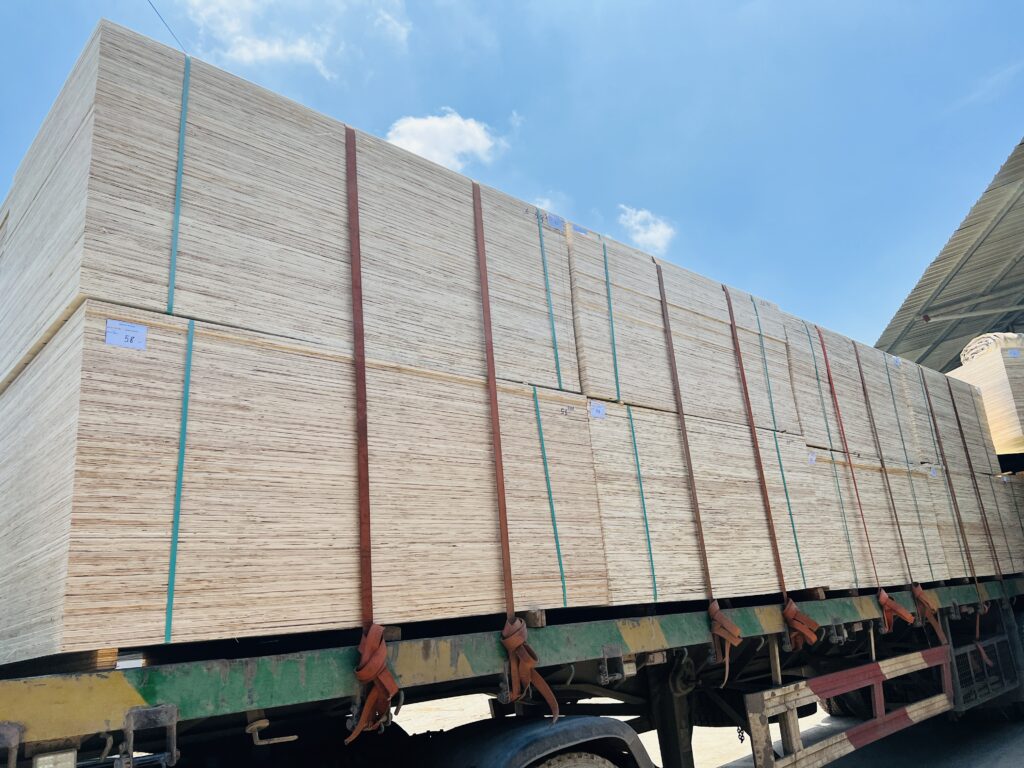
- Large Surface Area: Plywood is manufactured in large, uniform sheets (standard $1220 \times 2440$ mm), which solid wood cannot match without extensive joining. This reduces the number of seams in construction.
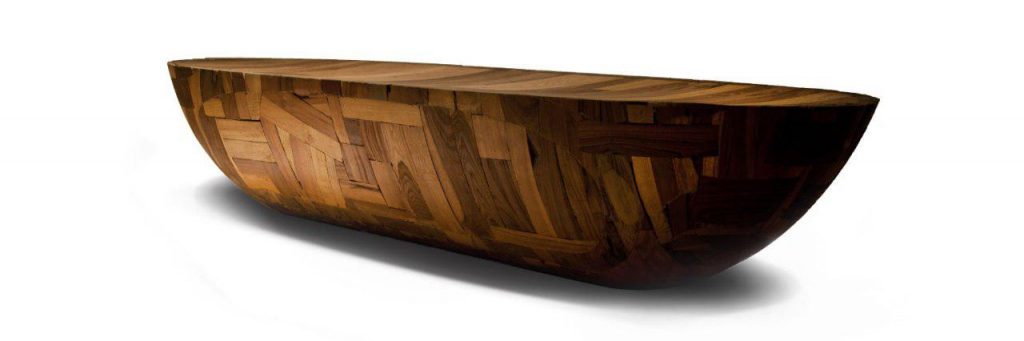
- Surface Finishing: High-grade plywood can be faced with premium hardwood veneers like Birch, Oak, or Walnut. This allows builders to achieve the look of solid wood with the added stability and cost-effectiveness of an engineered core.
- Curved Applications: Thin plywood layers can be bent to create curved surfaces, a feat that is difficult and expensive to achieve with solid timber.
IV. Sustainability and Cost-Efficiency
From an environmental and economic perspective, plywood offers distinct benefits:
- Log Utilization: The peeling process used to create veneers produces very little waste compared to sawing logs into solid lumber. This makes plywood a more efficient use of timber resources.
- Long-Term Value: Although the initial cost may be higher than OSB or MDF, the durability of plywood reduces maintenance and replacement costs over the building’s lifecycle, providing better long-term value.
V. Conclusion
The advantages of plywood—ranging from its cross-grained stability to its superior fastener retention—make it a versatile and reliable choice for a wide array of applications. Whether you are framing a house, laying a subfloor, or crafting high-end cabinetry, plywood offers a balance of strength, weight, and beauty that other building materials struggle to replicate.