Insight
Engineered Wood Doors and Fire Rating Standards: A Comprehensive Guide to Fire Safety Compliance
In modern architectural design and construction, Engineered Wood Doors have become the preferred choice due to their superior stability, durability, and aesthetic appeal. However, when specifying doors for commercial buildings, residential complexes, or areas requiring strict fire safety protocols, integrating a Fire Rating Standard is mandatory.
This article provides an in-depth, technical perspective on the composition, critical standards, and reasons why Engineered Fire Doors are a key component in any building’s fire protection system (FPS).
I. What Defines an Engineered Fire Door?
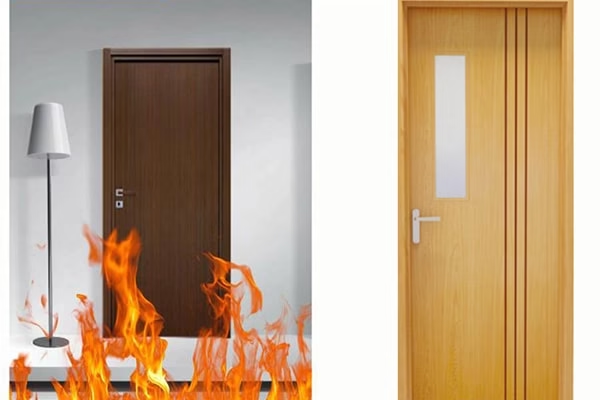
An Engineered Fire Door is not merely a common wood door; it is a tested system specifically designed to impede the spread of fire and smoke for a defined duration (commonly 60, 90, or 120 minutes).
1. Specialized Construction
The core structure is the defining, differentiating element compared to standard engineered wood doors:
- Fire-Resistant Core: Typically constructed from specialized high-density, non-combustible materials such as mineral wool, fire-rated gypsum board, or proprietary composite cores. This core resists ignition and maintains structural integrity under extreme thermal load.
- Adhesives: Only heat-resistant and fire-retardant adhesives are used, ensuring the external veneers do not delaminate when exposed to high temperatures.
- Intumescent Seals: This is a non-negotiable component. When exposed to high heat (approximately $200^{\circ}C$), the intumescent material expands rapidly, filling the gaps between the door slab and the door frame, effectively sealing off the passage of smoke and flames.
II. Essential Fire Rating Standards
For a product to be certified as an Engineered Fire Door, it must pass rigorous testing under specific international and regional standards:
| Standard | Area of Application | Significance & Rating Metrics |
| EN (European Norms) | Europe | Ratings define fire resistance based on integrity (E) and insulation (I) (e.g., EI 60, EI 90). |
| NFPA (National Fire Protection Association) | North America | Stringent regulations for construction materials and installation. Requires UL (Underwriters Laboratories) certification. |
| TCVN (Vietnamese National Standard) | Vietnam | Fire safety standards mandated by the Fire Police Department. Mandatory for public works, condominiums, and egress routes. |
Critical Note: The fire rating duration (e.g., 60 minutes) measures the time the door maintains its structural integrity without collapsing or allowing flame penetration.
III. Optimized Benefits of Engineered Fire Doors
The specification of Fire-Rated Engineered Doors offers superior advantages, especially in complex architectural projects.
1. Absolute Fire Safety Compliance
The primary function of the door is to create a compartmentalized “safe area” by containing the fire. This results in:
- Mitigated Property Damage: Prevents the fire from spreading to adjacent areas, protecting valuable assets.
- Extended Egress Time: Holds back smoke and flames, providing crucial time for occupants to evacuate safely.
2. Structural Stability and Durability
Engineered Wood Doors inherently offer better stability than solid wood. The robust core structure and controlled surfacing materials ensure the door resists:
- Warping due to changes in humidity or temperature.
- Chipping or cracking during daily use.
3. High Aesthetics and Customization
Unlike traditional metal fire doors, Engineered Fire Doors can be finished with natural wood veneers or high-pressure laminates, allowing for seamless integration with the building’s high-end interior design scheme.
IV. Accurate Installation Procedures
An Engineered Fire Door is only effective if installed correctly. Improper installation can void the product’s certification:
- Frame and Hardware: Must use specialized frames, hinges, and locking hardware that carry an equivalent fire rating to the door slab.
- Seal Installation: Intumescent seals must be positioned accurately in the tested locations (typically grooves in the frame or door slab).
- Standard Clearances: The clearance (gap) between the door and the floor, as well as the frame, must be within the tight limits prescribed by the certified fire standard.
V. Conclusion
Engineered Fire Doors represent the perfect synergy between the aesthetic warmth of wood and stringent safety requirements. For specifiers and architects, choosing certified products, understanding the technical standards (especially TCVN and EN/NFPA), and ensuring precise installation are crucial steps for protecting human life and property.